

The First Step to Getting Good at Money
How treating money as a learnable skill changes everything

For a few years in my 30s, I lived next to the Fort Hamilton highway in Brooklyn. At first, the noise was loud and annoying, but eventually I got used to it and organized my life around it: keep the windows closed, turn on the white noise machines at night, everybody gets earplugs.
I acclimated to a persistent low-level stress around finances in a similar way.
When I felt stressed and overwhelmed about money, I treated myself to Thai take-out to cheer myself up and promised that next year was going to be The Year of the 401(k). But, afterward, I’d feel guilty and bad at money all over again.
Nobody beats themselves up for being bad at origami. You don’t lie awake at night thinking about the paper crane you couldn’t fold, or feel a hot flush of shame when someone mentions the word “origami” at a dinner party. If you’re bad at it, it’s just something you can improve with practice. No big deal.
But if someone thinks they’re bad at money, something completely different happens. A lot of shame happens. Money feels less like a skill you can learn and more like an assessment of your character—which, apparently, is someone irresponsible and impulsive who can’t be trusted.
And while you may feel as fragile as an egg if you think you’re bad at money, it might also just be the information you need.
The gift of realizing you’re bad at money is that now you can change. You don’t have to stay on the same stressful, unsatisfying path. Admitting that you feel bad at money is the first step to getting good at it.
Too many mean-spirited loudmouths have given being bad at something a bad name.
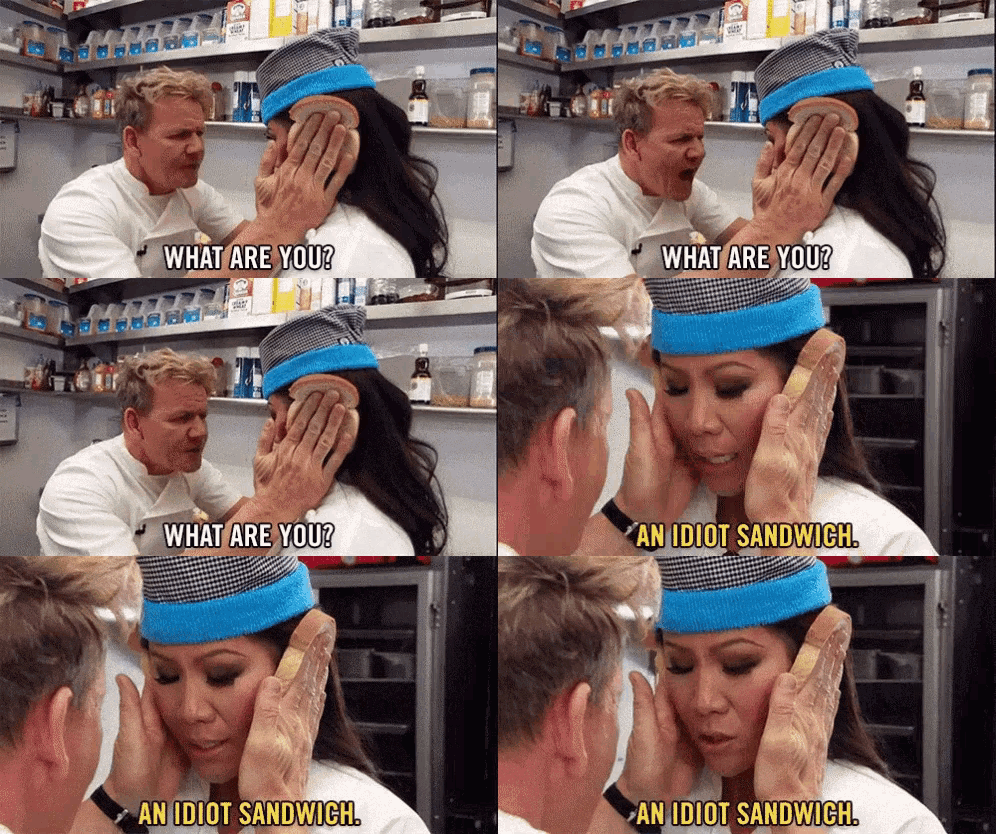
Carrying shame or defensiveness about a lack of skills can keep you preoccupied for a long time, or be so painful that you pretend it’s not true. It’s completely understandable and unhelpful.
The seductive narrative is that you struggle with money because you lack willpower, confidence, or are a hopelessly bad decision maker.
But here I would say, snap out of it! The trance you’ve been under has been spun by authoritative money gurus who create reality-TV style content out of people’s struggles.
It’s abetted by a culture in which hardly anyone shares details about their money, even among friends and family. The idea that spending and saving money is unlearnable is demonstrably false.
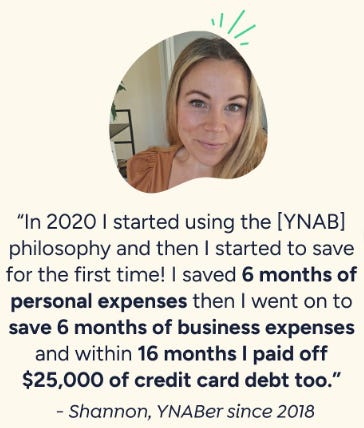
The millions of people who’ve stopped worrying about money with YNAB don’t all share a common genetic trait or all happen to have rich parents.
They’re people like this
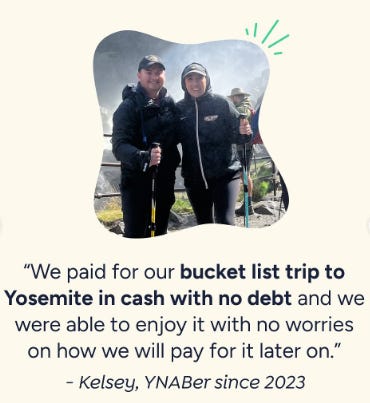
Or this.
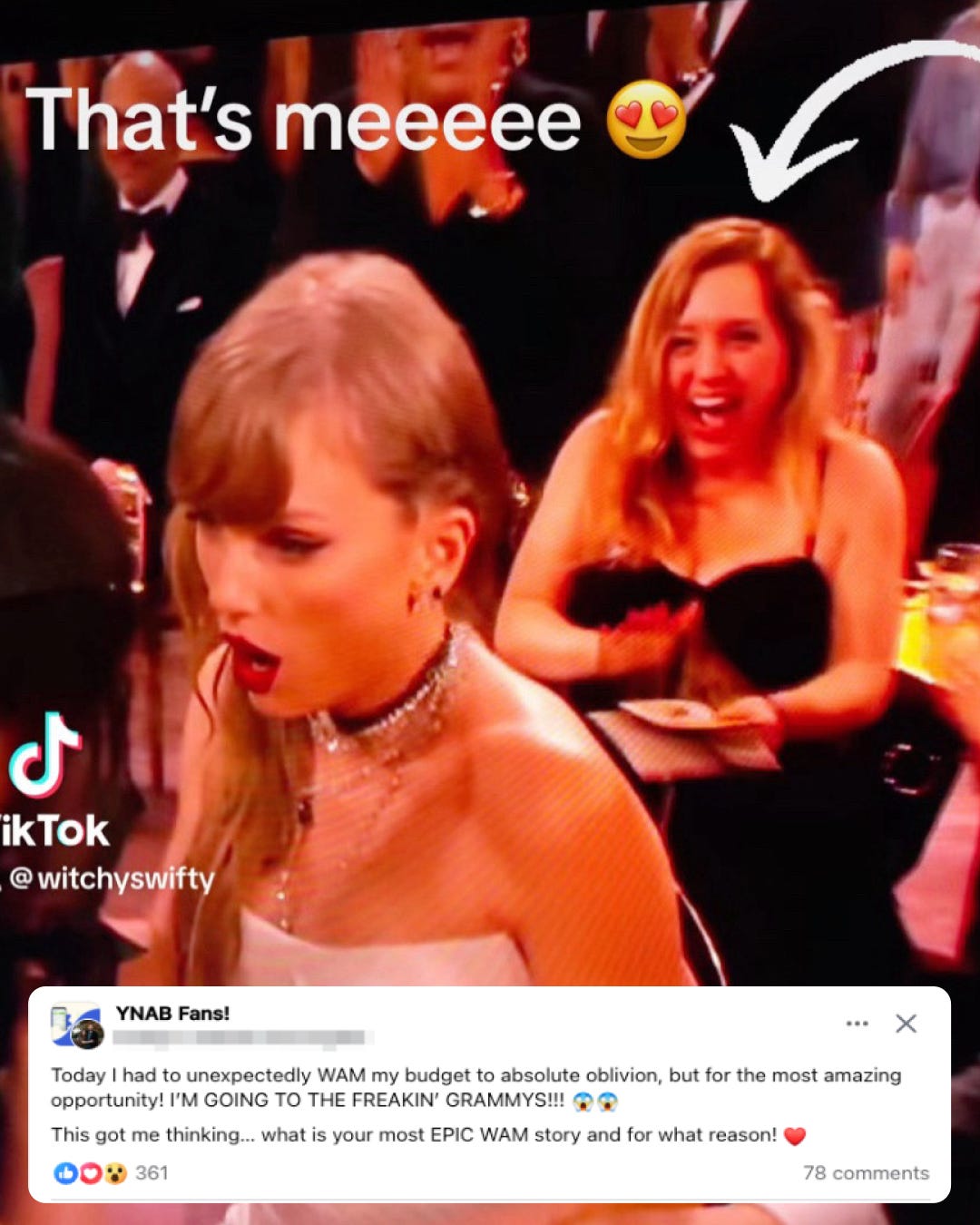
And they do stuff like this:
When you treat money as a skill to be sharpened:
You can learn what it actually costs to be you.
You can set aside money for the surprise expenses that *whispers* actually happen every year.
You can spend big on the stuff that makes you or your loved ones happy and you’ll learn to quickly pass on “forgettable” spending.
Again, what is important is snapping out of the trance and remembering that the shame of feeling bad at money is never going to help you get good at it.
Instead, notice the discomfort you’ve gotten used to: worrying about bills or the car payment, the tension with a partner. That stuff is bad, not you.
I’d love to hear from you in the comments:
Was there a moment when you stopped feeling bad at money and started feeling good at it? What changed?
Until next time,
Dan
As a recent widow in my early 60's, having to manage our money on my own was overwhelming, scary, and anxiety ridden. The only thing I was doing was looking at my spending in hindsight and constantly being fearful of my future. My brother turned me on to YNAB...thank goodness, which has calmed me down considerably. I feel more freedom knowing I have control over my finances. My future is still scary but that's a whole other topic....
Any possibility of more posts on this publication that aren’t completely based on “you’re bad at money?” I’ve been a YNAB user for several years and think I’m pretty ok with money…but I’m still interested in new ideas.